CO2 Separation Membrane Market: By Material Type, Inorganic Membranes, Mixed Matrix Membranes, and Others), By Module Type, By Application, End User, and Region Forecast 2021-2032
CO2 Separation Membrane Market: By Material Type, Inorganic Membranes, Mixed Matrix Membranes, and Others), By Module Type, By Application, End User, and Region Forecast 2021-2032
Report ID:912841
Published Date:Apr 2026
No of Pages:220
Format:

CO2 Separation Membrane Market size was valued at US$ 1,650.3 Million in 2025 and is projected to reach US$ 2,620.1 Million by 2032, growing at a CAGR of 7.3% from 2026-2032. Moreover, in the USA, the CO2 Separation Membrane Market is growing at a CAGR of 7.5% from 2026-2032.
A CO2 separation membrane is a selective, semi-permeable material designed to separate carbon dioxide from gas mixtures such as flue gas, natural gas, or biogas based on differences in molecular size, solubility, and diffusivity. These membranes act as energy-efficient barriers that allow CO2 to permeate faster than gases like nitrogen or methane, producing a CO2-rich stream and a purified gas stream. They are widely used in carbon capture, natural gas sweetening, hydrogen purification, and biogas upgrading. According to the U.S. Department of Energy, membrane systems operate without hazardous chemicals and offer modular design, lower footprint, and simpler operation compared to solvent-based technologies. Membrane-based CO2 separation is gaining traction as a low-energy alternative to amine absorption, with continuous operation advantages. Demonstration projects indicate near-commercial maturity, with systems handling up to 150 tonnes of CO2 per day and achieving 70%–90% capture efficiency in multi-stage setups. DOE-supported studies report captures costs of approximately $56.9 per tonne of CO2, while the International Energy Agency highlights that global carbon capture capacity could reach ~435 million tonnes annually by 2030, reflecting strong momentum for membrane technologies.
Based on the Material Type:
Polymeric membranes dominate the CO2 separation membrane segment due to their maturity and cost-effectiveness. According to the U.S. Department of Energy, polymer-based membranes are a key focus for scalable CO2 capture technologies. Studies show polyimide membranes can improve CO2 removal efficiency by ~75%, supporting their widespread industrial adoption.
Based on the Module Type:
Hollow fiber membranes dominate due to their high surface-area-to-volume ratio and scalability in industrial gas separation. According to the U.S. Department of Energy, compact hollow fiber modules enable efficient large-scale CO2 capture systems, supporting pilot plants processing millions of standard cubic feet of gas per day in natural gas and industrial applications.
Based on the Application:
Natural gas processing remains a key application, as CO2 must be reduced to ~2–3% to meet pipeline specifications, making separation essential. Government reports (e.g., NITI Aayog) highlight large-scale CO2 capture integration in gas plants, including facilities capturing up to 8.4 million tonnes per year, reinforcing strong demand for membrane technologies.
Based on the End User:
Oil & Gas is the dominant end-use segment for CO2 separation membranes due to its high share in carbon capture applications. According to the International Energy Agency, around 65% of global operating CO2 capture capacity is concentrated in natural gas processing plants, where CO2 removal is essential for gas purification, making this sector the primary driver of membrane adoption.
Study Period
2026-2032Base Year
2025CAGR
7.3%Largest Market
North-AmericaFastest Growing Market
Asia-Pacific
The growth of CO2 separation membranes is driven by strong regulatory, industrial, and technological factors aligned with global decarbonization goals. Governments and international bodies such as the International Energy Agency emphasize carbon capture as a key pathway to reduce emissions, especially in hard-to-abate sectors. Membrane technologies are gaining traction due to their operational advantages. According to the U.S. Department of Energy, they require no hazardous chemicals, offer modular scalability, and reduce plant footprint. Technological progress is another major driver, with DOE-supported projects showing ~10% reduction in capture costs (from $63.3 to $56.9 per tonne of CO2) and significantly improved membrane performance. In terms of efficiency, membrane systems are capable of 70%–90% CO2 capture, with advanced configurations achieving over 90% and even up to 99% capture levels.
In addition, pilot projects supported by DOE demonstrate membranes can economically capture around 90% of emissions from power plants. The need for energy-efficient alternatives is further reinforced as conventional amine-based systems can increase power plant costs by up to 80% and significantly raise energy use, creating demand for membrane solutions. Together, these factors such as policy pressure, cost reduction, efficiency gains, and industrial decarbonization needs are accelerating adoption.
The CO2 separation membrane market faces several technical and economic restraints that limit large-scale adoption despite its potential. A key limitation is the permeability–selectivity trade-off, where improving one property reduces the other, constraining performance under industrial conditions. In addition, membranes struggle with low CO2 partial pressure in flue gas, which reduces the driving force for separation and requires significantly larger membrane areas, increasing system complexity and cost. Most systems also cannot achieve required purity in a single stage, necessitating multi-stage configurations with compressors or vacuum systems, further increasing capital costs. Durability is another concern, as membranes are prone to chemical degradation, fouling, and performance instability under industrial conditions. From an infrastructure perspective, integrating membrane systems into existing plants is challenging due to retrofitting requirements and process redesign.
Moreover, the technology still lacks widespread commercialization, with limited large-scale deployments compared to conventional methods. Competing technologies such as amine absorption remain dominant, while membrane systems must also address scalability and long-term operational stability targets (e.g., ~5 years industrial lifespan goals), highlighting the need for further technological advancements.
The CO2 separation membrane market presents strong opportunities driven by accelerating investments in clean energy and decarbonization technologies. According to the International Energy Agency, over 700 CCUS projects are under development globally, with capture capacity expected to reach ~435 million tonnes per year by 2030, highlighting a massive deployment opportunity for membrane technologies within capture systems. In addition, governments are significantly increasing funding, with the U.S. and Europe collectively committing billions of dollars to carbon capture and demonstration projects, while at least USD 90 billion in public funding is required by 2026 to scale emerging technologies to commercial readiness. The hydrogen economy further strengthens demand, with global hydrogen consumption reaching ~100 million tonnes in 2024, creating opportunities for CO2 separation in blue hydrogen production. Industrial decarbonization is another major opportunity, as CCUS is expected to contribute ~15% of cumulative emissions reductions in long-term energy transition scenarios.
Moreover, CO2 utilization pathways are expanding, with around 230 million tonnes of CO2 already used annually in industries such as fertilizers and fuels, alongside emerging applications in synthetic fuels and chemicals. These trends, combined with advancements in membrane materials and modular deployment capabilities, position CO2 separation membranes as a critical technology in the evolving low-carbon economy.
The CO2 separation membrane market is witnessing several important trends driven by the broader evolution of carbon capture and energy transition technologies. One key trend is the rapid scale-up of CCUS deployment, with the International Energy Agency reporting a ~35% increase in announced CO2 capture capacity for 2030 in 2023, indicating accelerating project pipelines. At the same time, carbon capture is expanding into new industrial sectors such as cement and steel, where large-scale projects including major cement capture facilities are coming online. Technological innovation is another major trend, with continuous advancements in membrane materials and system design improving performance and enabling wider industrial applicability. There is also a growing shift toward integration with industrial processes and hybrid systems, as highlighted by the U.S. Department of Energy, which is supporting more efficient and integrated capture solutions.
In addition, CO2 utilization is emerging as a parallel trend, with nearly 15 million tonnes per year of CO2 expected to be used in new applications by 2030, including fuels and chemicals. Despite over $40 billion already invested globally, carbon capture still accounts for less than 0.1% of annual emissions, underscoring both the early-stage nature and significant growth potential of membrane-based solutions
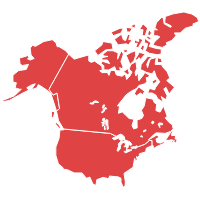
The regional landscape of CO2 separation membranes is closely aligned with the global deployment of carbon capture infrastructure, with North America emerging as the dominant region due to its mature CCUS ecosystem and large operational base. According to the International Energy Agency, global operational carbon capture capacity exceeded 50 million tonnes per year as of early 2025, with a significant share concentrated in North America, supported by established infrastructure and early project adoption.
Europe follows as a policy-driven market, where strong regulatory frameworks and funding mechanisms are accelerating industrial decarbonization and cluster-based CCUS development. Meanwhile, Asia-Pacific is the fastest-growing region, driven by rapid industrialization and increasing emissions, with countries like China and India expanding large-scale CCUS initiatives and industrial hubs. Data from the IEA indicates that planned and announced capture capacity across regions is expected to reach ~430 million tonnes annually by 2030, reflecting particularly strong growth momentum in Asia-Pacific and emerging economies. The Middle East is also gaining importance, leveraging its gas-processing infrastructure and high-CO2 reservoirs, while Latin America remains an emerging market with early-stage adoption.
Latin America
Europe
Asia Pacific
Middle East
North America
|
Report Benchmarks |
Details |
|
Report Study Period |
2026-2032 |
|
Market Size in 2025 |
US$ 1,650.3 Million |
|
Market Size in 2032 |
US$ 2,620.1 Million |
|
Market CAGR |
7.3% |
|
By Material Type |
|
|
By Module Type |
|
|
By Application |
|
|
By End User |
|
|
By Region |
|
The CO2 separation membrane market is transitioning from a technology validation phase to early-stage commercialization, supported by strong policy backing, industrial demand, and increasing investments. As highlighted, organizations such as the International Energy Agency and U.S. Department of Energy emphasize carbon capture as critical for decarbonizing hard-to-abate sectors, which directly supports membrane adoption. Recent developments, including funding secured by Membrane Technology and Research and pilot-scale advancements by Toray Industries, indicate a clear shift toward scaling and commercialization.
From an analyst perspective, the market presents a high growth but evolving opportunity, where advantages such as modularity, lower energy requirements, and operational simplicity position membranes as a competitive alternative to conventional technologies. However, challenges related to performance trade-offs, durability, and large-scale deployment remain critical barriers. Regionally, North America leads due to established infrastructure, while Asia-Pacific is emerging as the fastest-growing region driven by industrial expansion.
Overall, increasing project sizes, rising investments, and integration into large-scale CCUS systems suggest that CO2 separation membranes will play a strategic enabling role in the global energy transition, with significant long-term growth potential.
Download Free Sample Report

The CO2 separation membrane market size was valued at US$ 1,650.3 Million in 2025 and is projected to reach US$ 2,620.1 Million by 2032, growing at a CAGR of 7.3% from 2026-2032.
• Rising Demand for Natural Gas Processing • Stringent Climate Policies & Net-Zero Targets • Growth of CCUS (Carbon Capture, Utilization & Storage)
• Advancements in Membrane Technology • Growth of Hydrogen Economy (Blue Hydrogen) • Industrial Decarbonization (Hard-to-Abate Sectors)
The market report covers the Material Type, Module Type, Application End User, and region segments.
Generon, Fujifilm, Air Liquide, DIC Corporation, Toray Industries, Honeywell UOP, UBE Corporation, Evonik Industries, Air Products and Chemicals, Membrane Technology and Research, and among others are the key players in the market.
Asia Pacific is the fastest-growing region in the market
Content Updated Date: Apr 2026
| 1.Executive Summary |
| 2.Global CO2 Separation Membrane Market Introduction |
| 2.1.Global CO2 Separation Membrane Market - Taxonomy |
| 2.2.Global CO2 Separation Membrane Market - Definitions |
| 2.2.1.Material Type |
| 2.2.2.Module Type |
| 2.2.3.Application |
| 2.2.4.End User |
| 2.2.5.Region |
| 3.Global CO2 Separation Membrane Market Dynamics |
| 3.1. Drivers |
| 3.2. Restraints |
| 3.3. Opportunities/Unmet Needs of the Market |
| 3.4. Trends |
| 3.5. Product Landscape |
| 3.6. New Product Launches |
| 3.7. Impact of COVID 19 on Market |
| 4.Global CO2 Separation Membrane Market Analysis, 2021 - 2025 and Forecast 2026- 2032 |
| 4.1. Market Analysis, 2021 - 2025 and Forecast, 2026- 2032, (Sales Value USD Million) |
| 4.2. Year-Over-Year (Y-o-Y) Growth Analysis (%) |
| 4.3. Market Opportunity Analysis |
| 5.Global CO2 Separation Membrane Market By Material Type, 2021 - 2025 and Forecast 2026- 2032 (Sales Value USD Million) |
| 5.1. Polymeric Membranes |
| 5.1.1. Market Analysis, 2021 - 2025 and Forecast, 2026- 2032, (Sales Value USD Million) |
| 5.1.2. Year-Over-Year (Y-o-Y) Growth Analysis (%) and Market Share Analysis (%) |
| 5.1.3. Market Opportunity Analysis |
| 5.2. Inorganic Membranes |
| 5.2.1. Market Analysis, 2021 - 2025 and Forecast, 2026- 2032, (Sales Value USD Million) |
| 5.2.2. Year-Over-Year (Y-o-Y) Growth Analysis (%) and Market Share Analysis (%) |
| 5.2.3. Market Opportunity Analysis |
| 5.3. Mixed Matrix Membranes (MMM) |
| 5.3.1. Market Analysis, 2021 - 2025 and Forecast, 2026- 2032, (Sales Value USD Million) |
| 5.3.2. Year-Over-Year (Y-o-Y) Growth Analysis (%) and Market Share Analysis (%) |
| 5.3.3. Market Opportunity Analysis |
| 5.4. Others |
| 5.4.1. Market Analysis, 2021 - 2025 and Forecast, 2026- 2032, (Sales Value USD Million) |
| 5.4.2. Year-Over-Year (Y-o-Y) Growth Analysis (%) and Market Share Analysis (%) |
| 5.4.3. Market Opportunity Analysis |
| 6.Global CO2 Separation Membrane Market By Module Type, 2021 - 2025 and Forecast 2026- 2032 (Sales Value USD Million) |
| 6.1. Hollow Fiber |
| 6.1.1. Market Analysis, 2021 - 2025 and Forecast, 2026- 2032, (Sales Value USD Million) |
| 6.1.2. Year-Over-Year (Y-o-Y) Growth Analysis (%) and Market Share Analysis (%) |
| 6.1.3. Market Opportunity Analysis |
| 6.2. Spiral Wound |
| 6.2.1. Market Analysis, 2021 - 2025 and Forecast, 2026- 2032, (Sales Value USD Million) |
| 6.2.2. Year-Over-Year (Y-o-Y) Growth Analysis (%) and Market Share Analysis (%) |
| 6.2.3. Market Opportunity Analysis |
| 6.3. Plate & Frame |
| 6.3.1. Market Analysis, 2021 - 2025 and Forecast, 2026- 2032, (Sales Value USD Million) |
| 6.3.2. Year-Over-Year (Y-o-Y) Growth Analysis (%) and Market Share Analysis (%) |
| 6.3.3. Market Opportunity Analysis |
| 6.4. Others |
| 6.4.1. Market Analysis, 2021 - 2025 and Forecast, 2026- 2032, (Sales Value USD Million) |
| 6.4.2. Year-Over-Year (Y-o-Y) Growth Analysis (%) and Market Share Analysis (%) |
| 6.4.3. Market Opportunity Analysis |
| 7.Global CO2 Separation Membrane Market By Application, 2021 - 2025 and Forecast 2026- 2032 (Sales Value USD Million) |
| 7.1. Carbon Capture/CO2 Removal |
| 7.1.1. Market Analysis, 2021 - 2025 and Forecast, 2026- 2032, (Sales Value USD Million) |
| 7.1.2. Year-Over-Year (Y-o-Y) Growth Analysis (%) and Market Share Analysis (%) |
| 7.1.3. Market Opportunity Analysis |
| 7.2. Natural Gas Processing |
| 7.2.1. Market Analysis, 2021 - 2025 and Forecast, 2026- 2032, (Sales Value USD Million) |
| 7.2.2. Year-Over-Year (Y-o-Y) Growth Analysis (%) and Market Share Analysis (%) |
| 7.2.3. Market Opportunity Analysis |
| 7.3. Hydrogen Purification |
| 7.3.1. Market Analysis, 2021 - 2025 and Forecast, 2026- 2032, (Sales Value USD Million) |
| 7.3.2. Year-Over-Year (Y-o-Y) Growth Analysis (%) and Market Share Analysis (%) |
| 7.3.3. Market Opportunity Analysis |
| 7.4. Biogas Upgrading |
| 7.4.1. Market Analysis, 2021 - 2025 and Forecast, 2026- 2032, (Sales Value USD Million) |
| 7.4.2. Year-Over-Year (Y-o-Y) Growth Analysis (%) and Market Share Analysis (%) |
| 7.4.3. Market Opportunity Analysis |
| 7.5. Others |
| 7.5.1. Market Analysis, 2021 - 2025 and Forecast, 2026- 2032, (Sales Value USD Million) |
| 7.5.2. Year-Over-Year (Y-o-Y) Growth Analysis (%) and Market Share Analysis (%) |
| 7.5.3. Market Opportunity Analysis |
| 8.Global CO2 Separation Membrane Market By End User, 2021 - 2025 and Forecast 2026- 2032 (Sales Value USD Million) |
| 8.1. Chemicals & Petrochemicals |
| 8.1.1. Market Analysis, 2021 - 2025 and Forecast, 2026- 2032, (Sales Value USD Million) |
| 8.1.2. Year-Over-Year (Y-o-Y) Growth Analysis (%) and Market Share Analysis (%) |
| 8.1.3. Market Opportunity Analysis |
| 8.2. Power Generation |
| 8.2.1. Market Analysis, 2021 - 2025 and Forecast, 2026- 2032, (Sales Value USD Million) |
| 8.2.2. Year-Over-Year (Y-o-Y) Growth Analysis (%) and Market Share Analysis (%) |
| 8.2.3. Market Opportunity Analysis |
| 8.3. Oil & Gas |
| 8.3.1. Market Analysis, 2021 - 2025 and Forecast, 2026- 2032, (Sales Value USD Million) |
| 8.3.2. Year-Over-Year (Y-o-Y) Growth Analysis (%) and Market Share Analysis (%) |
| 8.3.3. Market Opportunity Analysis |
| 8.4. Cement |
| 8.4.1. Market Analysis, 2021 - 2025 and Forecast, 2026- 2032, (Sales Value USD Million) |
| 8.4.2. Year-Over-Year (Y-o-Y) Growth Analysis (%) and Market Share Analysis (%) |
| 8.4.3. Market Opportunity Analysis |
| 8.5. Biogas |
| 8.5.1. Market Analysis, 2021 - 2025 and Forecast, 2026- 2032, (Sales Value USD Million) |
| 8.5.2. Year-Over-Year (Y-o-Y) Growth Analysis (%) and Market Share Analysis (%) |
| 8.5.3. Market Opportunity Analysis |
| 8.6. Steel |
| 8.6.1. Market Analysis, 2021 - 2025 and Forecast, 2026- 2032, (Sales Value USD Million) |
| 8.6.2. Year-Over-Year (Y-o-Y) Growth Analysis (%) and Market Share Analysis (%) |
| 8.6.3. Market Opportunity Analysis |
| 8.7. Others |
| 8.7.1. Market Analysis, 2021 - 2025 and Forecast, 2026- 2032, (Sales Value USD Million) |
| 8.7.2. Year-Over-Year (Y-o-Y) Growth Analysis (%) and Market Share Analysis (%) |
| 8.7.3. Market Opportunity Analysis |
| 9.Global CO2 Separation Membrane Market By Region, 2021 - 2025 and Forecast 2026- 2032 (Sales Value USD Million) |
| 9.1. North America |
| 9.1.1. Market Analysis, 2021 - 2025 and Forecast, 2026- 2032, (Sales Value USD Million) |
| 9.1.2. Year-Over-Year (Y-o-Y) Growth Analysis (%) and Market Share Analysis (%) |
| 9.1.3. Market Opportunity Analysis |
| 9.2. Europe |
| 9.2.1. Market Analysis, 2021 - 2025 and Forecast, 2026- 2032, (Sales Value USD Million) |
| 9.2.2. Year-Over-Year (Y-o-Y) Growth Analysis (%) and Market Share Analysis (%) |
| 9.2.3. Market Opportunity Analysis |
| 9.3. Asia Pacific (APAC) |
| 9.3.1. Market Analysis, 2021 - 2025 and Forecast, 2026- 2032, (Sales Value USD Million) |
| 9.3.2. Year-Over-Year (Y-o-Y) Growth Analysis (%) and Market Share Analysis (%) |
| 9.3.3. Market Opportunity Analysis |
| 9.4. Middle East and Africa (MEA) |
| 9.4.1. Market Analysis, 2021 - 2025 and Forecast, 2026- 2032, (Sales Value USD Million) |
| 9.4.2. Year-Over-Year (Y-o-Y) Growth Analysis (%) and Market Share Analysis (%) |
| 9.4.3. Market Opportunity Analysis |
| 9.5. Latin America |
| 9.5.1. Market Analysis, 2021 - 2025 and Forecast, 2026- 2032, (Sales Value USD Million) |
| 9.5.2. Year-Over-Year (Y-o-Y) Growth Analysis (%) and Market Share Analysis (%) |
| 9.5.3. Market Opportunity Analysis |
| 10.North America CO2 Separation Membrane Market ,2021 - 2025 and Forecast 2026- 2032 (Sales Value USD Million) |
| 10.1. Material Type Analysis 2021 - 2025 and Forecast 2026- 2032 by Sales Value USD Million, Y-o-Y Growth (%), and Market Share (%) |
| 10.1.1.Polymeric Membranes |
| 10.1.2.Inorganic Membranes |
| 10.1.3.Mixed Matrix Membranes (MMM) |
| 10.1.4.Others |
| 10.2. Module Type Analysis 2021 - 2025 and Forecast 2026- 2032 by Sales Value USD Million, Y-o-Y Growth (%), and Market Share (%) |
| 10.2.1.Hollow Fiber |
| 10.2.2.Spiral Wound |
| 10.2.3.Plate & Frame |
| 10.2.4.Others |
| 10.3. Application Analysis 2021 - 2025 and Forecast 2026- 2032 by Sales Value USD Million, Y-o-Y Growth (%), and Market Share (%) |
| 10.3.1.Carbon Capture/CO2 Removal |
| 10.3.2.Natural Gas Processing |
| 10.3.3.Hydrogen Purification |
| 10.3.4.Biogas Upgrading |
| 10.3.5.Others |
| 10.4. End User Analysis 2021 - 2025 and Forecast 2026- 2032 by Sales Value USD Million, Y-o-Y Growth (%), and Market Share (%) |
| 10.4.1.Chemicals & Petrochemicals |
| 10.4.2.Power Generation |
| 10.4.3.Oil & Gas |
| 10.4.4.Cement |
| 10.4.5.Biogas |
| 10.4.6.Steel |
| 10.4.7.Others |
| 10.5. Country Analysis 2021 - 2025 and Forecast 2026- 2032 by Sales Value USD Million, Y-o-Y Growth (%), and Market Share (%) |
| 10.5.1.United States of America (USA) |
| 10.5.2.Canada |
| 11.Europe CO2 Separation Membrane Market ,2021 - 2025 and Forecast 2026- 2032 (Sales Value USD Million) |
| 11.1. Material Type Analysis and Forecast by Sales Value USD Million, Y-o-Y Growth (%), and Market Share (%) |
| 11.1.1.Polymeric Membranes |
| 11.1.2.Inorganic Membranes |
| 11.1.3.Mixed Matrix Membranes (MMM) |
| 11.1.4.Others |
| 11.2. Module Type Analysis 2021 - 2025 and Forecast 2026- 2032 by Sales Value USD Million, Y-o-Y Growth (%), and Market Share (%) |
| 11.2.1.Hollow Fiber |
| 11.2.2.Spiral Wound |
| 11.2.3.Plate & Frame |
| 11.2.4.Others |
| 11.3. Application Analysis 2021 - 2025 and Forecast 2026- 2032 by Sales Value USD Million, Y-o-Y Growth (%), and Market Share (%) |
| 11.3.1.Carbon Capture/CO2 Removal |
| 11.3.2.Natural Gas Processing |
| 11.3.3.Hydrogen Purification |
| 11.3.4.Biogas Upgrading |
| 11.3.5.Others |
| 11.4. End User Analysis 2021 - 2025 and Forecast 2026- 2032 by Sales Value USD Million, Y-o-Y Growth (%), and Market Share (%) |
| 11.4.1.Chemicals & Petrochemicals |
| 11.4.2.Power Generation |
| 11.4.3.Oil & Gas |
| 11.4.4.Cement |
| 11.4.5.Biogas |
| 11.4.6.Steel |
| 11.4.7.Others |
| 11.5. Country Analysis 2021 - 2025 and Forecast 2026- 2032 by Sales Value USD Million, Y-o-Y Growth (%), and Market Share (%) |
| 11.5.1.Germany |
| 11.5.2.France |
| 11.5.3.Italy |
| 11.5.4.United Kingdom (UK) |
| 11.5.5.Spain |
| 12.Asia Pacific (APAC) CO2 Separation Membrane Market ,2021 - 2025 and Forecast 2026- 2032 (Sales Value USD Million) |
| 12.1. Material Type Analysis and Forecast by Sales Value USD Million, Y-o-Y Growth (%), and Market Share (%) |
| 12.1.1.Polymeric Membranes |
| 12.1.2.Inorganic Membranes |
| 12.1.3.Mixed Matrix Membranes (MMM) |
| 12.1.4.Others |
| 12.2. Module Type Analysis 2021 - 2025 and Forecast 2026- 2032 by Sales Value USD Million, Y-o-Y Growth (%), and Market Share (%) |
| 12.2.1.Hollow Fiber |
| 12.2.2.Spiral Wound |
| 12.2.3.Plate & Frame |
| 12.2.4.Others |
| 12.3. Application Analysis 2021 - 2025 and Forecast 2026- 2032 by Sales Value USD Million, Y-o-Y Growth (%), and Market Share (%) |
| 12.3.1.Carbon Capture/CO2 Removal |
| 12.3.2.Natural Gas Processing |
| 12.3.3.Hydrogen Purification |
| 12.3.4.Biogas Upgrading |
| 12.3.5.Others |
| 12.4. End User Analysis 2021 - 2025 and Forecast 2026- 2032 by Sales Value USD Million, Y-o-Y Growth (%), and Market Share (%) |
| 12.4.1.Chemicals & Petrochemicals |
| 12.4.2.Power Generation |
| 12.4.3.Oil & Gas |
| 12.4.4.Cement |
| 12.4.5.Biogas |
| 12.4.6.Steel |
| 12.4.7.Others |
| 12.5. Country Analysis 2021 - 2025 and Forecast 2026- 2032 by Sales Value USD Million, Y-o-Y Growth (%), and Market Share (%) |
| 12.5.1.China |
| 12.5.2.India |
| 12.5.3.Australia and New Zealand (ANZ) |
| 12.5.4.Japan |
| 12.5.5.Rest of APAC |
| 13.Middle East and Africa (MEA) CO2 Separation Membrane Market ,2021 - 2025 and Forecast 2026- 2032 (Sales Value USD Million) |
| 13.1. Material Type Analysis and Forecast by Sales Value USD Million, Y-o-Y Growth (%), and Market Share (%) |
| 13.1.1.Polymeric Membranes |
| 13.1.2.Inorganic Membranes |
| 13.1.3.Mixed Matrix Membranes (MMM) |
| 13.1.4.Others |
| 13.2. Module Type Analysis 2021 - 2025 and Forecast 2026- 2032 by Sales Value USD Million, Y-o-Y Growth (%), and Market Share (%) |
| 13.2.1.Hollow Fiber |
| 13.2.2.Spiral Wound |
| 13.2.3.Plate & Frame |
| 13.2.4.Others |
| 13.3. Application Analysis 2021 - 2025 and Forecast 2026- 2032 by Sales Value USD Million, Y-o-Y Growth (%), and Market Share (%) |
| 13.3.1.Carbon Capture/CO2 Removal |
| 13.3.2.Natural Gas Processing |
| 13.3.3.Hydrogen Purification |
| 13.3.4.Biogas Upgrading |
| 13.3.5.Others |
| 13.4. End User Analysis 2021 - 2025 and Forecast 2026- 2032 by Sales Value USD Million, Y-o-Y Growth (%), and Market Share (%) |
| 13.4.1.Chemicals & Petrochemicals |
| 13.4.2.Power Generation |
| 13.4.3.Oil & Gas |
| 13.4.4.Cement |
| 13.4.5.Biogas |
| 13.4.6.Steel |
| 13.4.7.Others |
| 13.5. Country Analysis 2021 - 2025 and Forecast 2026- 2032 by Sales Value USD Million, Y-o-Y Growth (%), and Market Share (%) |
| 13.5.1.GCC Countries |
| 13.5.2.South Africa |
| 13.5.3.Rest of MEA |
| 14.Latin America CO2 Separation Membrane Market ,2021 - 2025 and Forecast 2026- 2032 (Sales Value USD Million) |
| 14.1. Material Type Analysis and Forecast by Sales Value USD Million, Y-o-Y Growth (%), and Market Share (%) |
| 14.1.1.Polymeric Membranes |
| 14.1.2.Inorganic Membranes |
| 14.1.3.Mixed Matrix Membranes (MMM) |
| 14.1.4.Others |
| 14.2. Module Type Analysis 2021 - 2025 and Forecast 2026- 2032 by Sales Value USD Million, Y-o-Y Growth (%), and Market Share (%) |
| 14.2.1.Hollow Fiber |
| 14.2.2.Spiral Wound |
| 14.2.3.Plate & Frame |
| 14.2.4.Others |
| 14.3. Application Analysis 2021 - 2025 and Forecast 2026- 2032 by Sales Value USD Million, Y-o-Y Growth (%), and Market Share (%) |
| 14.3.1.Carbon Capture/CO2 Removal |
| 14.3.2.Natural Gas Processing |
| 14.3.3.Hydrogen Purification |
| 14.3.4.Biogas Upgrading |
| 14.3.5.Others |
| 14.4. End User Analysis 2021 - 2025 and Forecast 2026- 2032 by Sales Value USD Million, Y-o-Y Growth (%), and Market Share (%) |
| 14.4.1.Chemicals & Petrochemicals |
| 14.4.2.Power Generation |
| 14.4.3.Oil & Gas |
| 14.4.4.Cement |
| 14.4.5.Biogas |
| 14.4.6.Steel |
| 14.4.7.Others |
| 14.5. Country Analysis 2021 - 2025 and Forecast 2026- 2032 by Sales Value USD Million, Y-o-Y Growth (%), and Market Share (%) |
| 14.5.1.Brazil |
| 14.5.2.Mexico |
| 14.5.3.Rest of LA |
| 15. Competition Landscape |
| 15.1. Market Player Profiles (Introduction, Brand/Product Sales, Financial Analysis, Product Offerings, Key Developments, Collaborations, M & A, Strategies, and SWOT Analysis) |
| 15.2.1.Generon |
| 15.2.2.Fujifilm |
| 15.2.3.Air Liquide |
| 15.2.4.DIC Corporation |
| 15.2.5.Toray Industries |
| 15.2.6.Honeywell UOP |
| 15.2.7.UBE Corporation |
| 15.2.8.Evonik Industries |
| 15.2.9.Air Products and Chemicals |
| 15.2.10.Membrane Technology and Research |
| 16. Research Methodology |
| 17. Appendix and Abbreviations |
Key Market Players

 Download Sample